

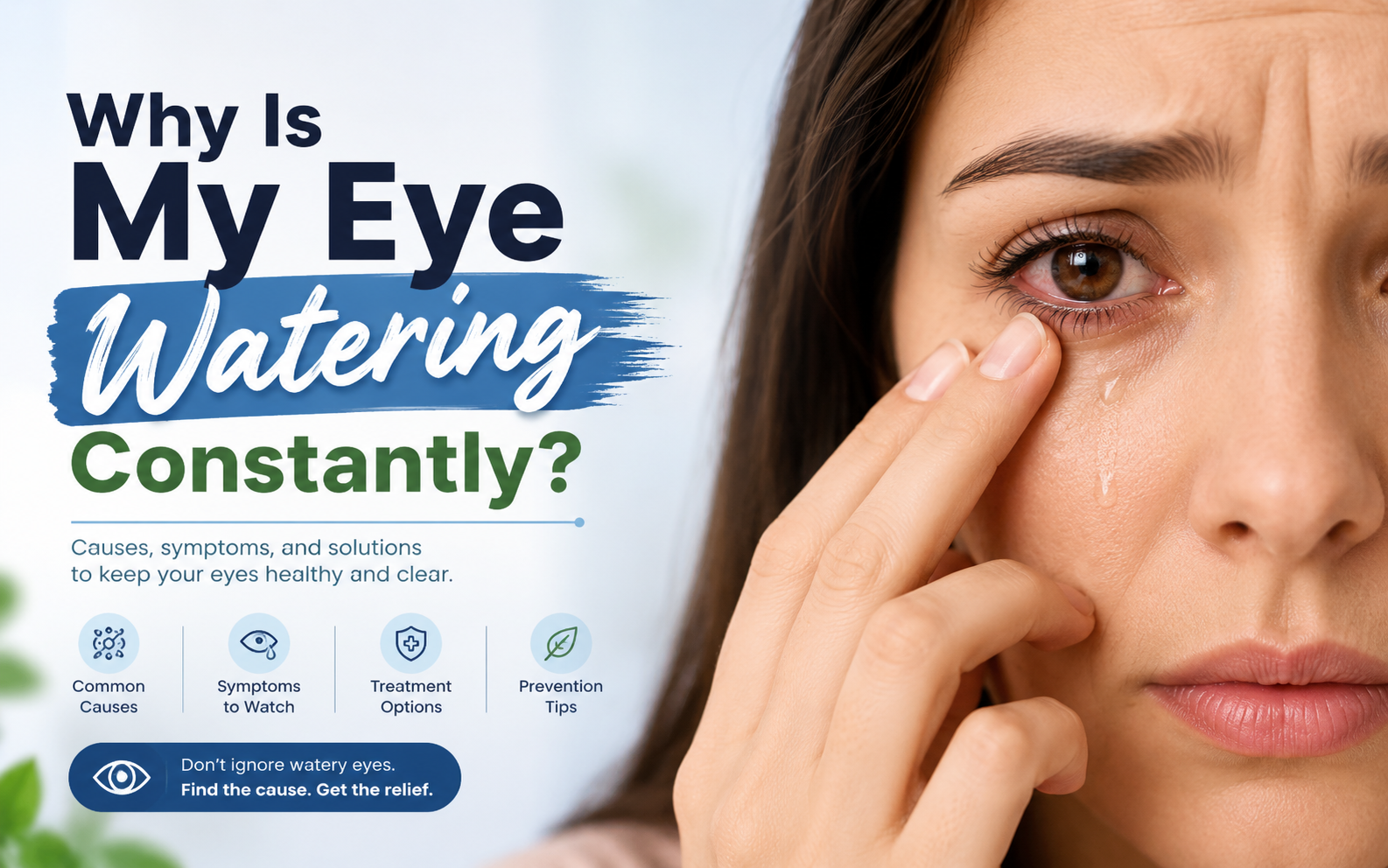
Constant watering of the eyes can be frustrating and may interfere with daily activities. While tears are essential for keeping the eyes healthy and lubricated, excessive tearing often indicates an underlying problem.
Excessive tearing can happen due to many reasons, including dryness, allergy, infection, blocked tear ducts, eyelid problems, injury, or irritation from dust and pollution. Understanding the cause is important because the treatment depends on the underlying problem.
10 Common Causes of Watery Eyes
There are several reasons why your eyes may water continuously. Some causes are simple and temporary, while others may require examination and treatment by an ophthalmologist.
- Dry Eye Syndrome
It may sound surprising, but dry eyes are one of the most common causes of watery eyes. When the eyes become dry, the surface of the eye gets irritated. In response, the eyes produce extra tears as a protective mechanism. This is known as reflex tearing.
- Eye Allergy
Eye allergies are another common reason for excessive watering. Allergies can be triggered by dust, pollen, pollution, pet dander, cosmetics, or seasonal changes. When the eyes come in contact with an allergen, they may become red, itchy, swollen, and watery.
- Eye Infection or Conjunctivitis
Eye infections, commonly known as conjunctivitis, can cause watering, redness, irritation, and discharge. Conjunctivitis may be viral, bacterial, or allergic in nature.
In bacterial conjunctivitis, sticky yellow or green discharge may be present, especially after waking up. In viral conjunctivitis, watering and redness are usually more prominent.
- Blocked Tear Duct
A blocked tear duct can prevent normal drainage of tears. When tears cannot drain properly, they collect in the eye and overflow. This may cause constant watering, especially in one eye.
- Foreign Body in the Eye
A small particle such as dust, sand, eyelash, or makeup product can enter the eye and cause sudden watering. The eye produces extra tears to wash out the foreign body. This may also be associated with pain, redness, irritation, and a feeling that something is stuck in the eye.
- Eyelid Problems
The eyelids play an important role in spreading tears evenly across the eye and helping them drain properly. Certain eyelid conditions can cause watery eyes.
Entropion is a condition in which the eyelid turns inward, causing the eyelashes to rub against the eye. This can lead to irritation, redness, watering, and corneal damage.
- Eye Strain from Screens
Long hours of screen use can lead to digital eye strain. When we use computers, mobile phones, or tablets for extended periods, our blink rate decreases. Reduced blinking causes the tear film to evaporate faster, leading to dryness and irritation. The eyes may then produce extra tears in response.
- Corneal Injury or Scratch
The cornea is the clear front surface of the eye. A scratch or injury to the cornea can cause sudden watering, pain, redness, light sensitivity, and blurred vision. Corneal injuries may happen due to fingernails, dust particles, contact lenses, makeup brushes, or accidental trauma.
- Blepharitis
Blepharitis is inflammation of the eyelids, usually affecting the area where the eyelashes grow. It can cause watering, burning, itching, redness, crusting of eyelashes, and a gritty sensation in the eyes.
- Environmental Irritants
Dust, smoke, pollution, chemical fumes, strong perfumes, wind, and bright sunlight can irritate the eyes and cause watering. People living in polluted environments or working in dusty conditions may experience frequent eye irritation.
Why You Should Not Ignore Constant Eye Watering
Many people ignore watery eyes, assuming it is a minor problem. However, persistent watering can sometimes indicate infection, tear duct blockage, corneal injury, or other eye conditions that require treatment.
Ignoring symptoms may lead to worsening irritation, repeated infections, eye surface damage, or discomfort in daily life. Early diagnosis helps identify the actual cause and allows timely treatment before complications develop.
When Should You Visit an Ophthalmologist?
You should consult an ophthalmologist if eye watering is persistent or associated with any warning signs.
Consult an eye specialist if watering is associated with:
- Redness of the eye
- Pain or irritation
- Blurred vision
- Light sensitivity
- Swelling of eyelids
- Sticky discharge
- Recurrent infections
- Persistent symptoms lasting more than a few days
- History of eye injury
- Sudden decrease in vision
These symptoms may indicate a condition that needs proper medical attention.
If your eye watering is associated with redness, pain, discharge, swelling, blurred vision, light sensitivity, or sudden vision changes, it is important to consult an ophthalmologist. Early diagnosis and treatment can help prevent complications and provide effective relief.
If you are experiencing persistent eye watering, redness, pain, discharge, or blurred vision, call – 9082607039 or visit Vision & Growth Clinic for a comprehensive eye examination.